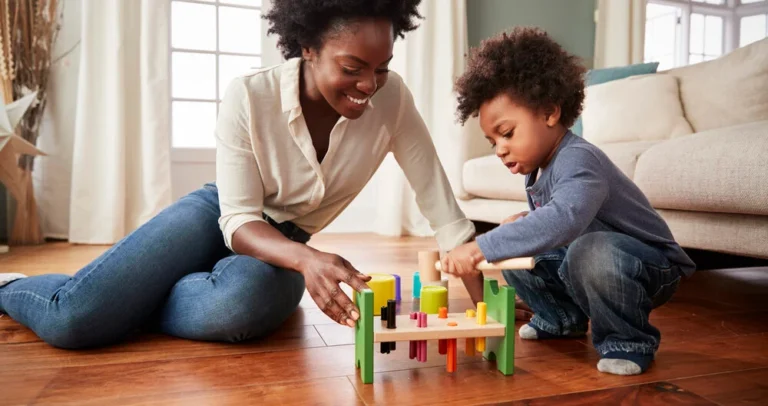
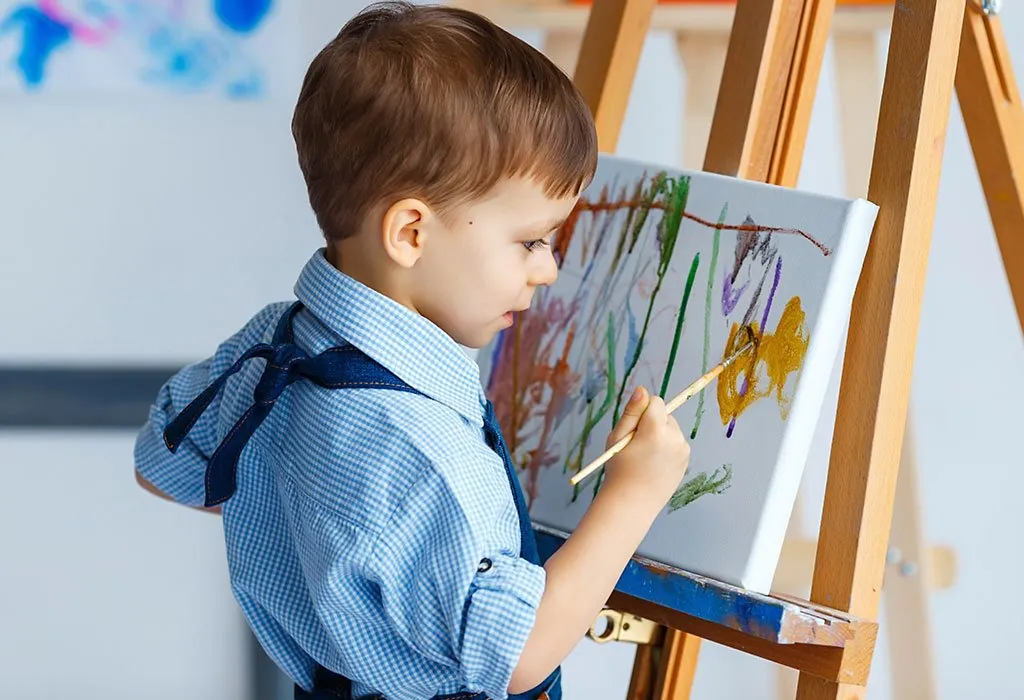
Toddlers are bundles of energy and curiosity, eager to explore the world around them. Play is not just fun for toddlers; it’s also a crucial way for them to learn and develop essential skills. This blog post will provide you with a variety of fun and engaging activities that you can do with your toddler to support their learning and growth.
The Importance of Play in Toddler Development
Play is often called the “work of childhood,” and for good reason. Through play, toddlers develop:
- Cognitive skills: Problem-solving, creativity, and symbolic thinking
- Physical skills: Gross motor skills (running, jumping) and fine motor skills (grasping, drawing)
- Social-emotional skills: Communication, cooperation, and emotional regulation
- Language skills: Vocabulary, grammar, and storytelling
Types of Play for Toddlers
There are many different types of play that are important for toddler development:
- Sensorimotor play: Involves exploring the world through senses and movement (e.g., playing with blocks, splashing in water).
- Symbolic play: Involves using objects and actions to represent something else (e.g., pretending to cook, playing dress-up).
- Constructive play: Involves creating something (e.g., building a tower with blocks, drawing a picture).
- Social play: Involves interacting with others (e.g., playing peek-a-boo, taking turns).
Fun Activities for Toddlers
Here are some fun and engaging activities that you can do with your toddler, categorized by type of play:
Sensorimotor Play
- Water play: Fill a basin with water and let your toddler splash, pour, and explore different objects in the water.
- Sensory bins: Create bins filled with different materials like rice, beans, or sand, and let your toddler explore the textures.
- Playdough: Make homemade playdough and let your toddler mold, shape, and create.
- Obstacle course: Create a simple obstacle course using pillows, blankets, and furniture, and let your toddler climb, crawl, and navigate.
- Dance party: Put on some music and let your toddler dance and move their body freely.
Symbolic Play
- Dress-up: Provide a variety of costumes and props and let your toddler pretend to be different characters.
- Tea party: Set up a tea party with toy cups and plates and let your toddler serve and interact with imaginary guests.
- Doctor/Nurse: Use a toy medical kit and let your toddler pretend to be a doctor or nurse, taking care of their “patients.”
- Cooking: Let your toddler help with simple cooking tasks, like stirring ingredients or washing vegetables.
- Storytelling: Make up stories together, using toys or puppets to act out the characters.
Constructive Play
- Block building: Provide a variety of blocks and let your toddler build towers, houses, and other structures.
- Drawing and painting: Provide crayons, markers, and paint, and let your toddler create their own artwork.
- Puzzles: Start with simple puzzles with large pieces and gradually increase the difficulty as your toddler’s skills improve.
- Building with everyday objects: Use household items like cardboard boxes, toilet paper rolls, and plastic containers to create structures and inventions.
- Gardening: Let your toddler help with simple gardening tasks, like planting seeds or watering plants.
Social Play
- Peek-a-boo: This classic game helps toddlers learn about object permanence and develop social interaction skills.
- Taking turns: Play games that involve taking turns, like rolling a ball back and forth or building a tower together.
- Simon Says: This game helps toddlers learn to follow directions and develop self-control.
- Playing with other children: Arrange playdates with other toddlers to encourage social interaction and cooperation.
- Singing and dancing in a group: Join a music class or simply sing and dance with your toddler and other children.
Adapting Activities for Different Ages and Abilities
Remember that toddlers develop at different rates, so it’s important to adapt activities to your child’s individual needs and abilities. Here are some tips:
- Keep it simple: Toddlers have short attention spans, so keep activities brief and focused.
- Be flexible: Be prepared to change activities if your toddler loses interest or becomes frustrated.
- Follow your child’s lead: Let your toddler guide the play and explore what interests them.
- Provide support: Offer assistance and encouragement when needed, but also allow your toddler to try things on their own.
- Make it inclusive: Adapt activities to accommodate children with different abilities and needs.
The Role of the Parent in Toddler Play
As a parent, you play a crucial role in supporting your toddler’s play and development. Here are some ways you can be involved:
- Provide a safe and stimulating environment: Create a space where your toddler can explore and play freely.
- Offer a variety of materials and toys: Provide a range of open-ended toys that can be used in different ways.
- Engage in play with your child: Join in the fun and interact with your toddler during playtime.
- Encourage exploration and discovery: Allow your toddler to try new things and make their own discoveries.
- Praise and encourage your child: Offer positive reinforcement for their efforts and accomplishments.
Conclusion
Play is essential for toddler development, and there are countless fun and engaging activities that you can do with your little one to support their learning and growth. By providing a stimulating environment, offering a variety of play experiences, and actively participating in playtime, you can help your toddler thrive and reach their full potential. So, get down on the floor, join in the fun, and watch your toddler’s imagination soar!