As your baby becomes more mobile, their curiosity will lead them to explore every nook and cranny of your home. Babyproofing is essential to create a safe environment and prevent potential accidents. This comprehensive checklist will guide you through crucial safety measures to protect your little explorer.
Room by Room Babyproofing Checklist:
Kitchen:
- Install safety latches and locks on cabinets and drawers, especially those containing cleaning supplies, sharp objects, and medications.
- Use stove knob covers to prevent accidental turning.
- Turn pot handles inward on the stovetop.
- Secure appliances like ovens and dishwashers to prevent tipping.
- Keep knives and other sharp utensils out of reach.
- Unplug small appliances when not in use and keep cords out of reach.
- Cover electrical outlets with outlet covers or protectors.
- Store breakable items out of reach.
Living Room & Common Areas:
- Secure bookshelves, TV stands, and other furniture to the wall to prevent tipping.
- Pad sharp corners of tables and furniture with corner guards.
- Keep electrical cords tucked away and out of reach.
- Secure rugs to prevent slipping.
- Keep small objects (coins, buttons, etc.) off the floor and out of reach.
- Ensure window blind cords are shortened or use cordless blinds to prevent strangulation.
Bathroom:
- Install toilet lid locks.
- Keep medications and toiletries locked away.
- Use a non-slip mat in the bathtub or shower.
- Check the water temperature before bathing your baby.
- Never leave your baby unattended in the bath, even for a moment.
Nursery:
- Ensure the crib meets current safety standards.
- Place the crib away from windows, blinds, and lamps.
- Remove bumpers, pillows, blankets, and soft toys from the crib to reduce the risk of suffocation.
- Secure changing tables to the wall and always use the safety strap.
- Keep diapering supplies within reach but out of the baby’s grasp.
Stairs:
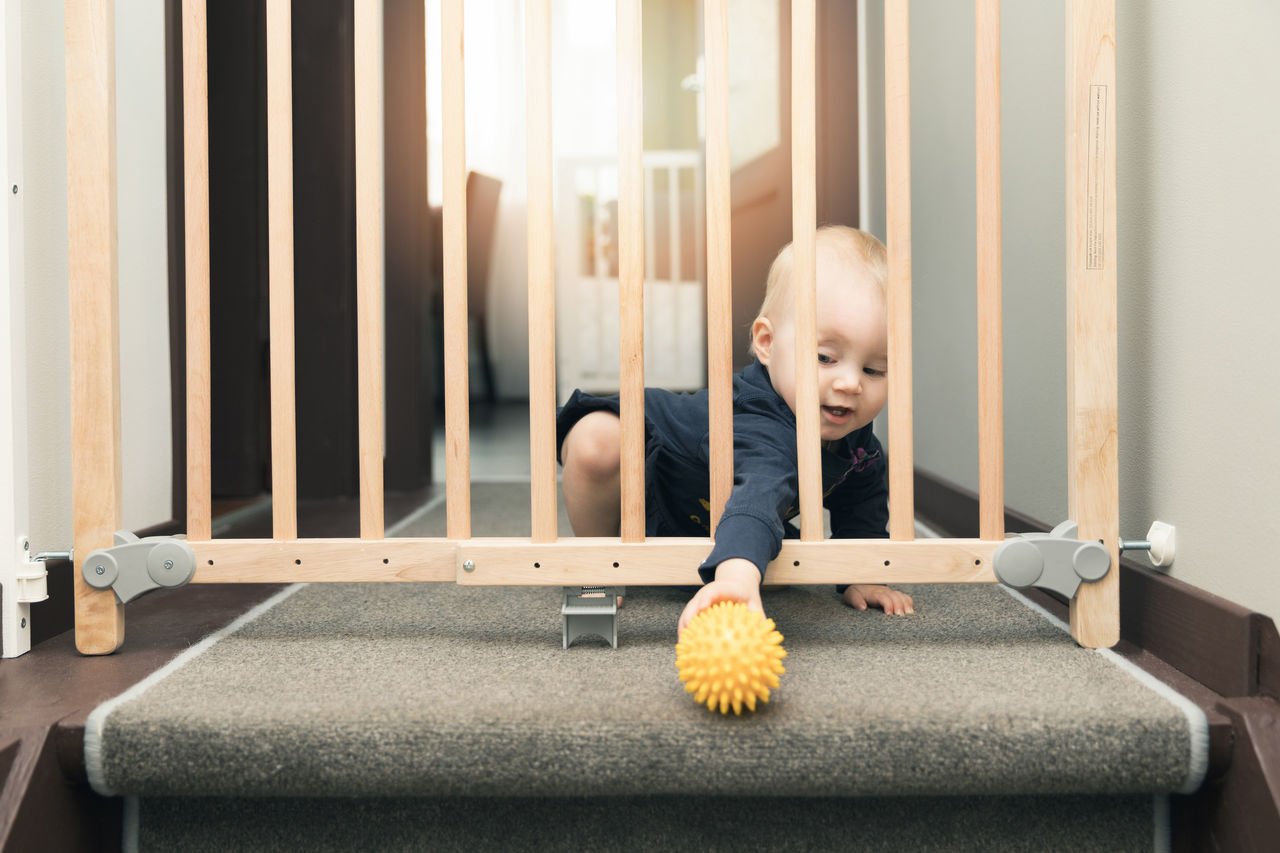
- Install safety gates at the top and bottom of stairs. Ensure they are securely mounted.
General Safety:
- Install smoke detectors on every level of your home and test them regularly.
- Install carbon monoxide detectors near sleeping areas.
- Keep houseplants out of reach, as some can be poisonous.
- Store cleaning supplies and chemicals in locked cabinets.
- Have emergency phone numbers readily accessible.
- Learn basic infant CPR.
Regular Review:
As your baby grows and reaches new developmental milestones, you’ll need to revisit your babyproofing measures. What was safe for a newborn may not be safe for a crawling or walking baby.