The 6-to-9-month period is marked by significant advancements in a baby’s motor skills, cognitive abilities, and language development. During this time, babies typically:
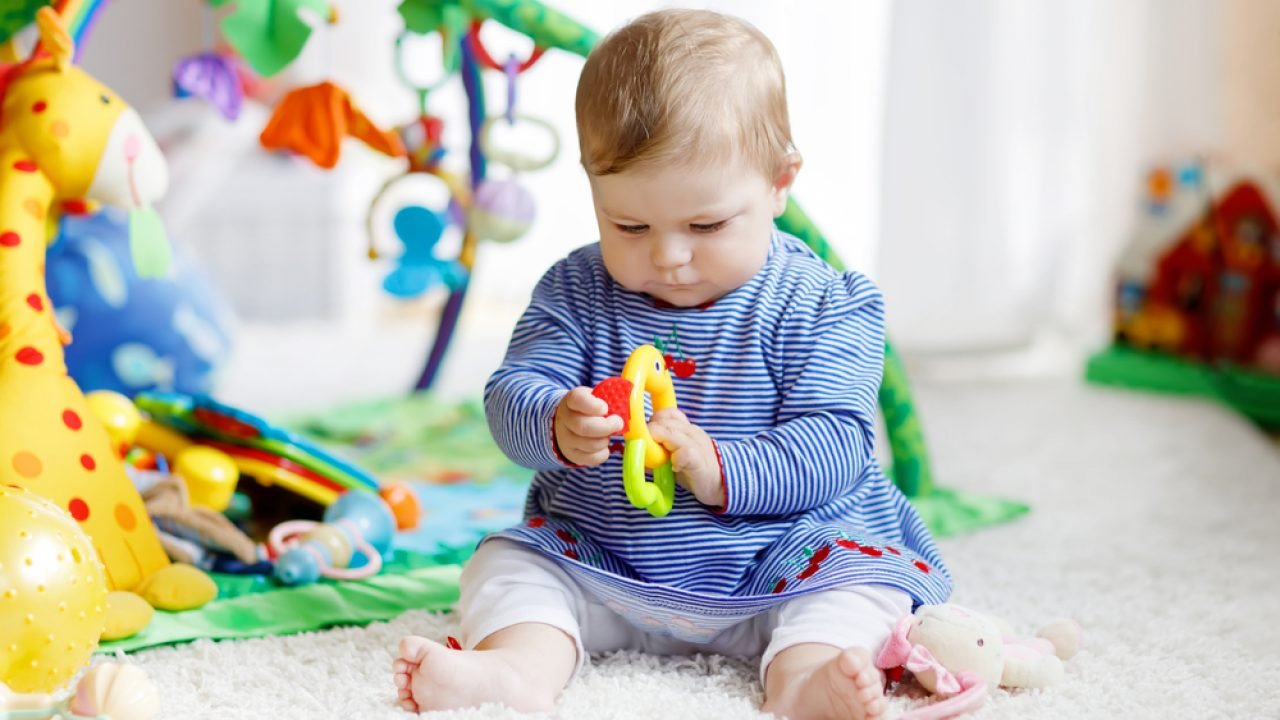
- Begin to sit up independently
- Start to crawl or show pre-crawling movements
- Improve their hand-eye coordination
- Respond to their name
- Babble and make a variety of sounds
- Show increased interest in exploring objects
Gross Motor Skills
- Crawling and Pre-Crawling Activities:
- Encourage Tummy Time: Continue to provide plenty of tummy time to strengthen the muscles necessary for crawling. Place toys slightly out of reach to motivate your baby to move.
- Rolling and Reaching: Encourage rolling by placing toys on either side of your baby. This helps them develop the coordination and strength needed for crawling.
- Crawling Games: Once your baby starts to crawl, create simple games like following them with a toy or setting up a small, safe obstacle course with pillows.
- Sitting and Reaching:
- Supported Sitting Practice: If your baby is still developing sitting skills, practice by positioning them with support, gradually reducing the support as they gain strength and balance.
- Reaching for Toys: While sitting, place toys around your baby to encourage them to reach in different directions. This helps improve their balance and coordination.
- Pulling Up to Stand (with support):
- Safe Surfaces: Provide safe and stable surfaces like a sturdy coffee table or a play gym for your baby to pull themselves up.
- Assistance: You can assist by holding their hands as they attempt to stand, providing support and stability.
Fine Motor Skills
- Object Permanence Games:
- Hiding Games: Play simple hiding games with toys. For example, hide a toy under a blanket and let your baby find it. This helps them understand that objects still exist even when they are out of sight.
- Peek-a-Boo: This classic game also reinforces object permanence and is a fun way to interact with your baby.
- Banging and Shaking Toys:
- Rattles and Shakers: Provide a variety of rattles and shakers with different sounds and textures. This helps develop their hand-eye coordination and introduces them to cause and effect.
- Banging Blocks: Give your baby soft blocks to bang together. This activity helps them explore sounds and develop their motor skills.
Language Development
- Babbling and Early Sounds:
- Imitation: Imitate the sounds your baby makes, and encourage them to imitate you. This back-and-forth “conversation” is crucial for language development.
- Introduce New Sounds: Expose your baby to a variety of sounds, such as different musical instruments, animal sounds, and household noises.
- Introducing Simple Words:
- Label Objects: When playing with your baby, label common objects like “ball,” “cup,” and “dog.” This helps them associate words with objects.
- Simple Phrases: Use simple phrases like “Mommy’s here” and “Daddy’s home” to help your baby start to understand language.
Cognitive Development
- Cause and Effect Toys:
- Push-Button Toys: Toys that make a sound or move when a button is pushed help babies understand cause and effect.
- Stacking Cups: Stacking cups allow babies to explore size and spatial relationships while also learning that their actions (stacking) have a result.
- Exploring Different Textures and Materials:
- Sensory Bins: Create simple sensory bins with materials like water, rice, or fabric scraps. Always supervise your baby to ensure they don’t put anything in their mouth.
- Texture Books: Provide books with different textures for your baby to touch and explore.
By incorporating these activities into your daily routine, you can effectively support your baby’s development during this crucial stage. Remember to keep activities engaging, varied, and safe, and always follow your baby’s cues.