The period between 3 and 6 months is a time of significant development for babies. They become more interactive, their motor skills improve, and they start to engage more with the world around them. Understanding the key developmental milestones for this age is crucial for choosing appropriate and beneficial activities. During this stage, babies typically begin to:
- Develop stronger head control
- Start to roll over
- Reach for and grasp objects
- Bring hands to mouth
- Respond to familiar people and sounds
- Begin to babble
Gross Motor Skills
Gross motor skills involve the large muscles in the body and are essential for movement and coordination.
- Tummy Time Progression: As your baby gains strength, they will tolerate tummy time for longer periods. Encourage this by placing toys in front of them to reach for. You can also lie down facing your baby during tummy time to interact and provide motivation.
- Rolling Over Activities: Many babies start to roll over between 3 and 6 months. Encourage this by placing a toy slightly out of reach to one side, motivating them to roll towards it. Ensure the surface is safe and spacious.
- Supported Sitting: Around this time, babies may start to sit with support. You can help them practice by placing them in a supported sitting position with pillows or a Boppy pillow. Provide them with toys to play with while sitting to help them maintain balance.
Fine Motor Skills
Fine motor skills involve the smaller muscles in the hands and fingers, crucial for tasks like grasping and manipulating objects.
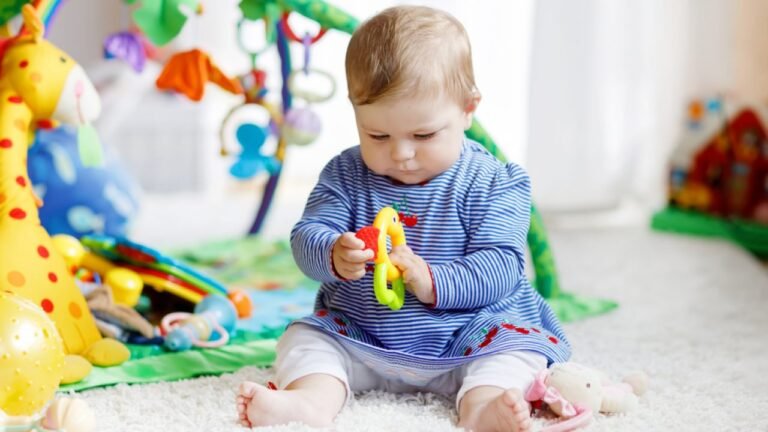
- Reaching and Grasping Toys: Provide your baby with a variety of safe toys to reach for, grasp, and hold. Toys with different textures, shapes, and colors are particularly engaging. This activity helps develop hand-eye coordination as babies learn to visually track an object and then reach for it.
- Passing Objects Between Hands: Encourage your baby to pass toys from one hand to the other. This helps develop bilateral coordination, which is the ability to use both sides of the body in a coordinated way.
Sensory Exploration
Babies at this age explore the world through their senses. Providing opportunities for sensory exploration is vital for their cognitive development.
- Textured Toys: Offer toys with different textures, such as soft plush toys, crinkly fabrics, and textured balls. These toys stimulate your baby’s sense of touch and help them learn about different materials.
- Exploring Different Sounds: Introduce your baby to various sounds, such as rattles, musical toys, and gentle music. This helps develop their auditory skills and can also be calming and soothing.
Social and Emotional Development
Social and emotional development is as important as physical and cognitive development. Activities that promote interaction and communication are key.
- Peek-a-Boo: This classic game helps babies understand object permanence (the idea that objects still exist even when they can’t see them) and encourages social interaction. The element of surprise and anticipation is also very engaging for babies.
- Interactive Play: Engage in face-to-face play with your baby, making eye contact, smiling, and talking. Imitate their sounds and facial expressions, and encourage them to imitate yours. This back-and-forth interaction is crucial for developing communication skills and strengthening the bond between you and your baby.
By incorporating these activities into your baby’s daily routine, you can support their growth and development across all domains. Remember to always supervise your baby during playtime and choose age-appropriate and safe toys.